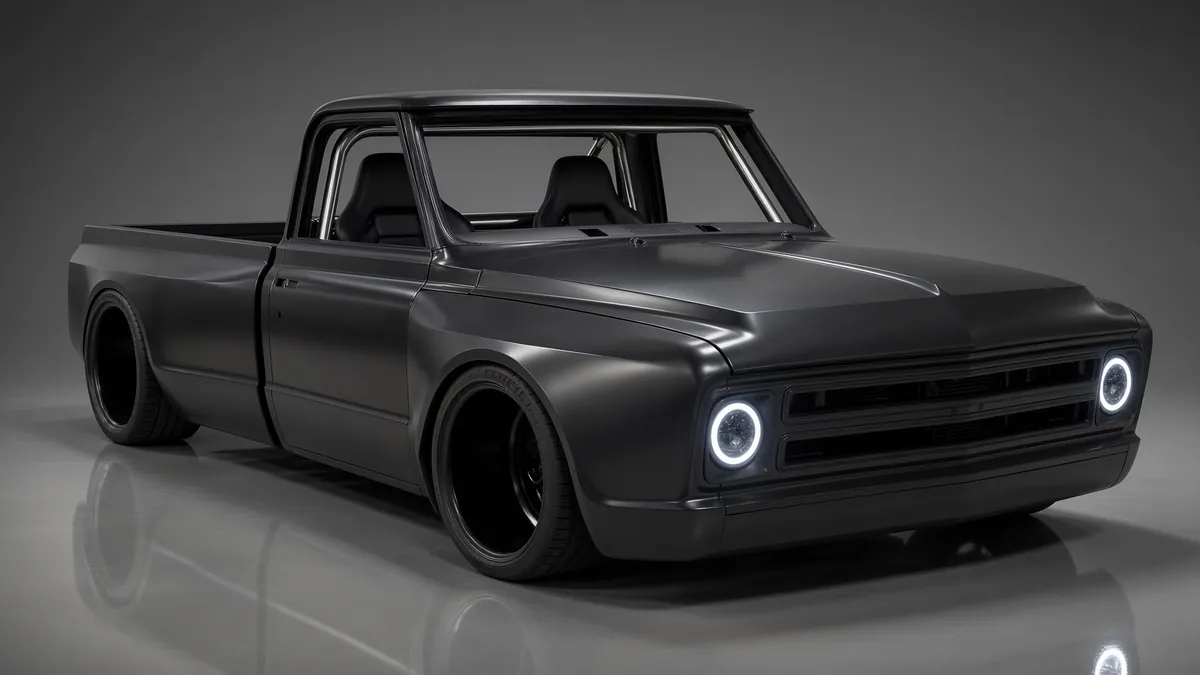
Everyone calls it matte black. It is neither matte nor black, and the difference is the whole reason the truck looks the way it does.
The first thing people say about this truck is that it is matte black. It is not matte, and it is not black. It is satin charcoal, and the distinction is not pedantry — it is the reason the body lines read at all.
Matte kills specular highlight. That is the point of it. On a small, busy body with a lot of creases, matte can work because the shapes are doing the work and the finish stays out of the way. On a C10 the body is broad and flat, and the character lines are long and shallow. Kill the highlight on a panel that size and the truck goes dead. It reads as a shape with no surface, which is how a lot of matte trucks end up looking like a primered project that someone gave up on.
What satin does instead
Satin holds a soft highlight that travels along the body line as you walk past. On the shoulder line running the length of the bed, that moving highlight is what tells you the panel is straight. It is also what makes the widebody read as widebody rather than as a truck with big fenders — you see the tub blend because the light rolls across it.
The charcoal side matters for the same reason. True black absorbs almost everything and flattens the panel again. Charcoal has enough value in it to show a gradient from the top of the fender to the bottom, which is where the width lives.
The cost of it
Satin is less forgiving than gloss on bodywork. Gloss hides small waves because your eye is busy with reflections. Satin shows them. Every hour saved in the booth gets spent twice over in block sanding, and if the metalwork underneath is not right, satin will tell on you in the first parking lot with overhead lights.
If you are considering it on your own truck, the honest advice is that the finish is the cheap part and the bodywork is not. Budget accordingly, in that order.